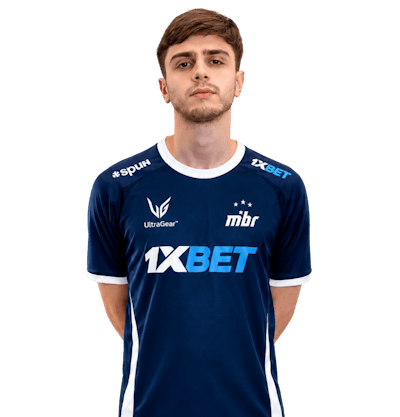



Monitor · ZOWIE by BenQActive · 660d
ZOWIE XL2546K
Tenure: 2025-01-01 → PRESENT
size: 24.5" · g sync: No · freesync: No · panel tech: TN · resolution: 1920x1080 · aspect ratio: 16:9 · refresh rate: 240
ZOWIE by BenQCheck price ↗
[01] — Settings & config · player_settings
Mouse, crosshair, viewmodel, video, HUD, OSD, driver and config — every row read from the verified settings file.
Last verified · Oct 18, 2026
Match tomaszin's 960 eDPIto your own mouse DPI.
Your sensitivity
Formula
eDPI ÷ DPI
sensitivity 1.2tomaszin's reference: 800 DPI × 1.2 sensitivity = 960 eDPI
Preview the live reticle on the active-duty map pool, then verify every geometry value and copy the share code.
See tomaszin's exact crosshair on every active-duty map — Dust II, Mirage, Inferno, Nuke, Anubis, Ancient. Switch maps to preview the same reticle over each layout.
Share code verified
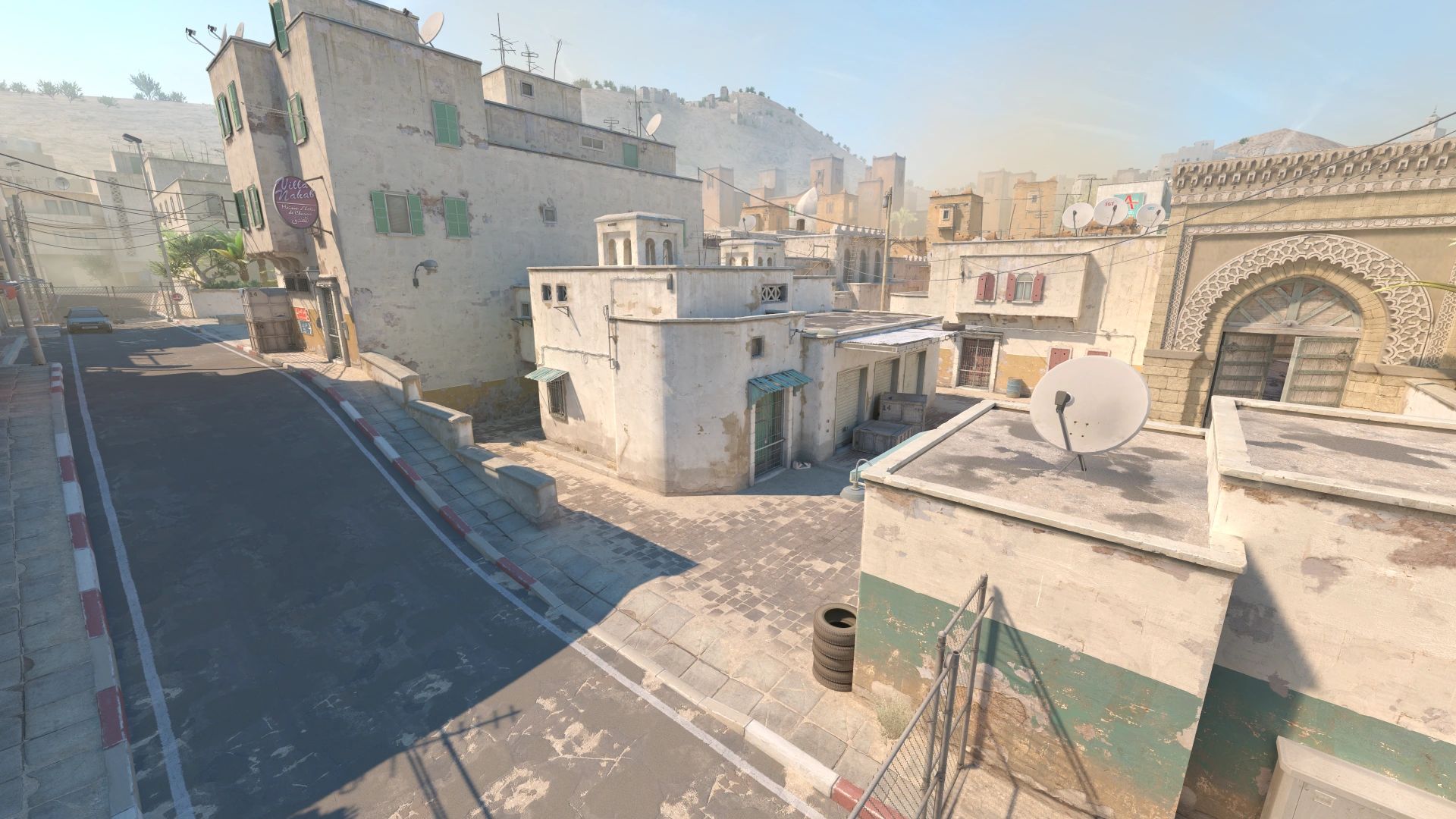
Color: RGB 36, 246, 253 (#24F6FD) · Size: 5 · Thickness: 1 · Gap: 2 · Dot: 0 · Outline: 0
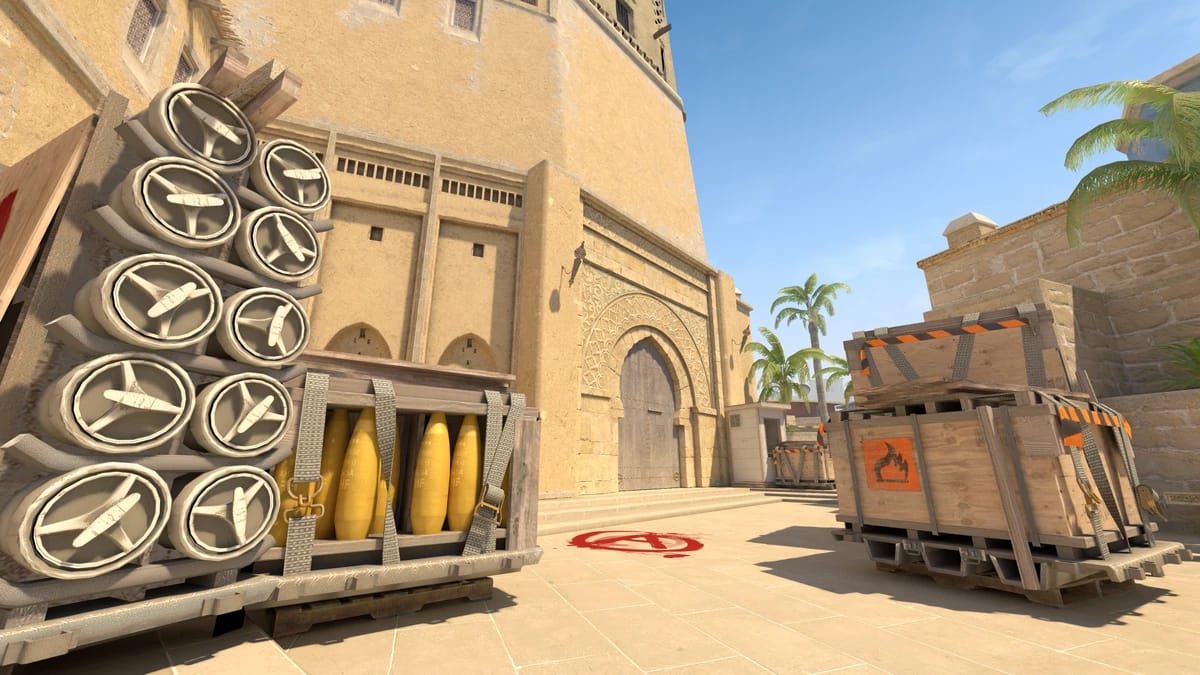
Color: RGB 36, 246, 253 (#24F6FD) · Size: 5 · Thickness: 1 · Gap: 2 · Dot: 0 · Outline: 0
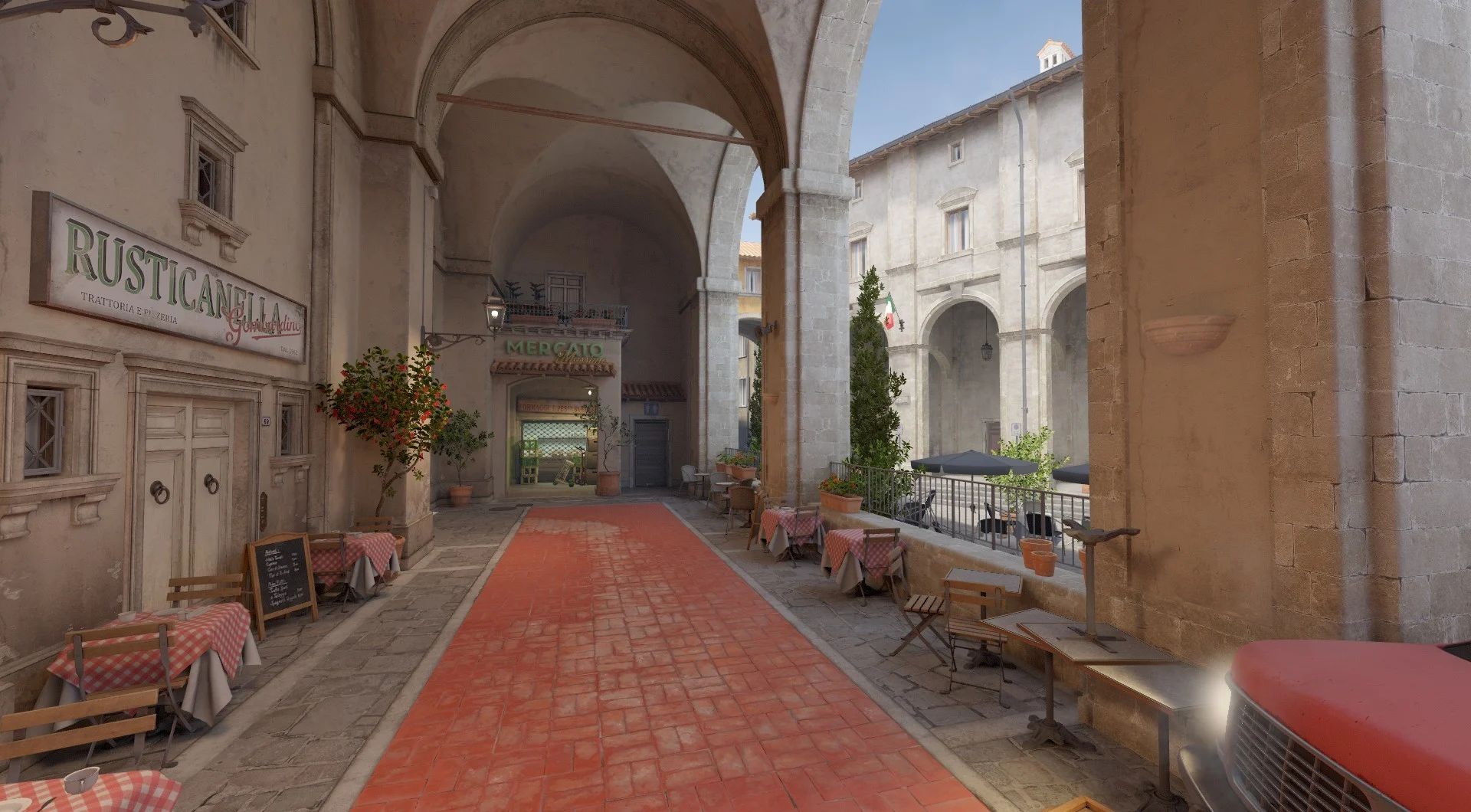
Color: RGB 36, 246, 253 (#24F6FD) · Size: 5 · Thickness: 1 · Gap: 2 · Dot: 0 · Outline: 0
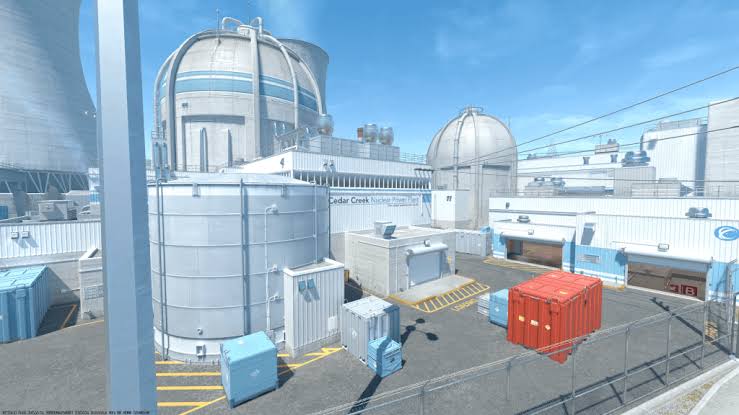
Color: RGB 36, 246, 253 (#24F6FD) · Size: 5 · Thickness: 1 · Gap: 2 · Dot: 0 · Outline: 0
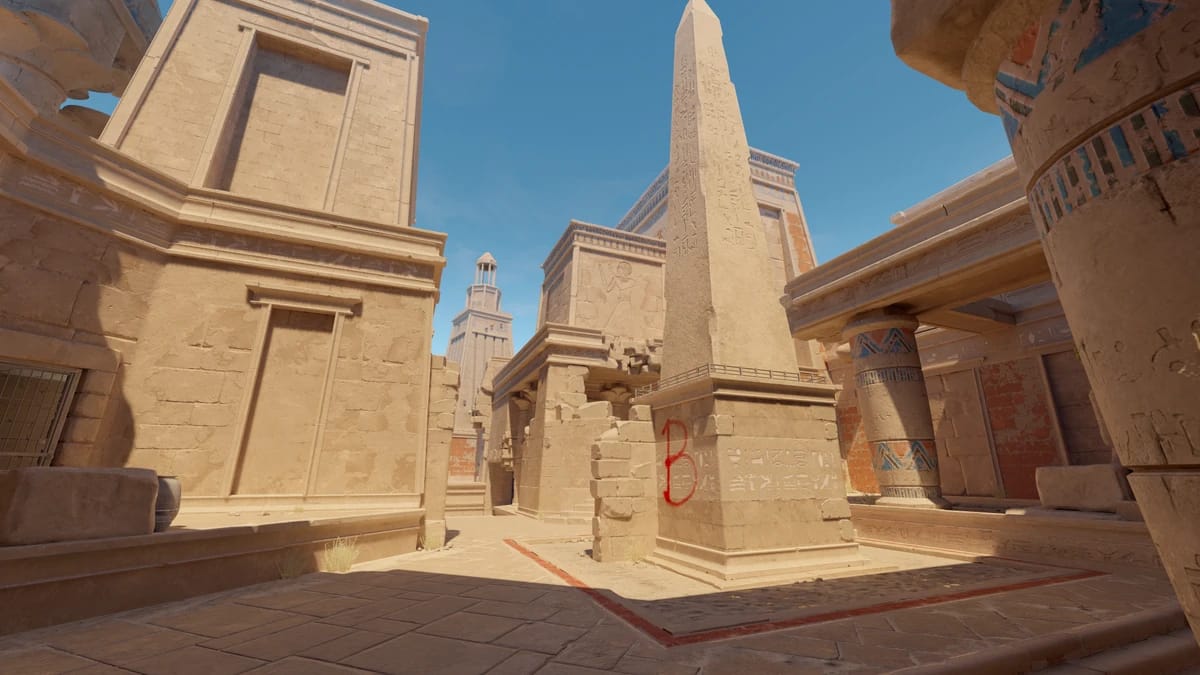
Color: RGB 36, 246, 253 (#24F6FD) · Size: 5 · Thickness: 1 · Gap: 2 · Dot: 0 · Outline: 0
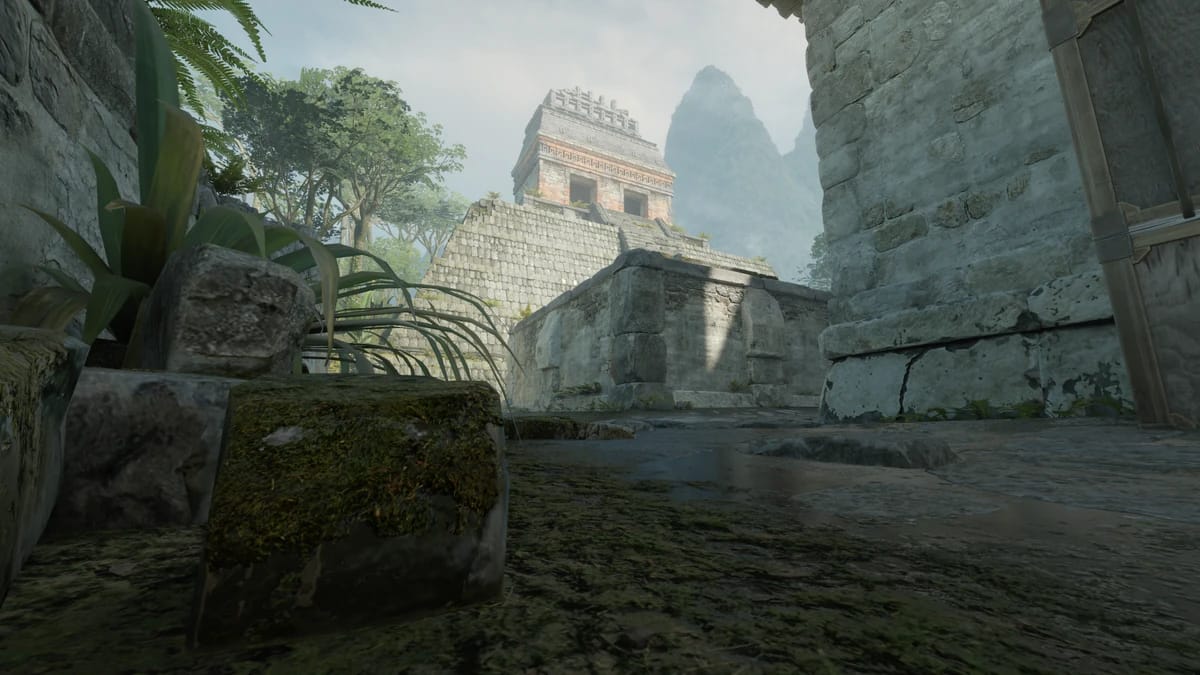
Color: RGB 36, 246, 253 (#24F6FD) · Size: 5 · Thickness: 1 · Gap: 2 · Dot: 0 · Outline: 0
CSduseuhCpiPXwhTSqevNABCdRwvkobq5pwYoqZTLbTk7JShare code
CSduseuhCpiPXwhTSqevNABCdRwvkobq5pwYoqZTLbTk7JStatic Cross · RGB 36, 246, 253
6 frame-pacing rows
viewmodel_fov 68; viewmodel_offset_x 2.5; viewmodel_offset_y 0; viewmodel_offset_z -2; viewmodel_presetpos 0;-freq 240 -novid -tickrate 128 -allow_third_party_software +mat_queue_mode 2 +fps_max 400[02] — Gear & PC specs · player_gears
5 active · 0 retired. PC components, CS2 gaming gear and setup accessories, each with its verified tenure.
CS2 gaming gear
5 items
Tenure: 2025-01-01 → PRESENT
size: 24.5" · g sync: No · freesync: No · panel tech: TN · resolution: 1920x1080 · aspect ratio: 16:9 · refresh rate: 240

Tenure: 2025-01-01 → PRESENT
dpi: 100-32000, in steps of 50 · shape: Ambidextrous · width: 6.06cm · height: 3.96cm · length: 12.42cm · sensor: HERO 25K · weight: 59g · connection: Wireless · button force: 98.4g · polling rate: 2000 · button switches: LIGHTFORCE Hybrid

Tenure: 2025-01-01 → PRESENT
height: 47cm · length: 39cm · material: Cloth · thickness: 3.5mm · foam firmness: Firm · overall glide: Control · stitched edges: Yes · static friction: High · dynamic friction: High · glide difference x y: 14.99%

Tenure: 2025-01-01 → PRESENT
pcb: Non-Hotswappable · rgb: Yes · width: 35.7cm · height: 3.8cm · length: 15.0cm · weight: 950g · switches: Unspecified Optical Switches · form factor: TKL

Tenure: 2025-01-01 → PRESENT
type: Closed-Back · weight: 240g · connection: Wired · microphone: Detachable · cable length: 180cm · noise cancelling: No
[03] — Verified skins loadout · 19 items
Screenshot-verified loadout, priced at current market estimates.

Factory New (FN)

Field-Tested (FT)

Minimal Wear (MW)

Factory New (FN)

Field-Tested (FT)

Field-Tested (FT)

Field-Tested (FT)

Factory New (FN)

Field-Tested (FT)

Battle-Scarred (BS)

Battle-Scarred (BS)

Field-Tested (FT)

Minimal Wear (MW)

Factory New (FN)

Field-Tested (FT)

Minimal Wear (MW)

Field-Tested (FT)

Field-Tested (FT)

Field-Tested (FT)
[04] — Tactical profile · player_career_stats
career
recent 3 months
CT side
1.07
ADR 77.7 · KAST 72.2% · K-D 6,369:6,343
T side
1.03
ADR 72.7 · KAST 70.2% · K-D 5,648:5,856
Round economy
| Season | Rating 3.0 | ADR | K-D | Maps | Event wins |
|---|---|---|---|---|---|
| 2026 | 1.05 | 72.7 | 1.00 | 153 | 0 |
| 2025 | 1.06 | 74.8 | 1.06 | 204 | 0 |
| 2024 | 1.09 | 76.9 | 0.99 | 204 | 0 |
| 2023 | 1.08 | 76.1 | 1.04 | 204 | 0 |
| 2022 | 1.05 | 71.4 | 1.01 | 204 | 0 |
[05] — The dossier · long-form
A documentary biography of the Argentine rifler who spent three years as the competitive core of BESTIA before MIBR made him its final piece in August 2026, built from HLTV profile data, HLTV news records and tournament reports.
Tomas Corna plays under the name tomaszin. He was 22 at the time of the profile record, Argentine, and listed as a member of MIBR, with career prize money of $67,898 and a three-month Rating 3.0 of 1.07 across his recent sample. The team history runs to six organisations: Hawks from January to March 2022, ex-Holkattes from May to September 2022, ape gang from September to November 2022, Boca Juniors from January to May 2023, BESTIA from May 2023 to August 2026, and MIBR from August 2026 onward. The shape of that list is the story in miniature: eighteen months of short spells in unstable domestic projects, then more than three years in one place.
The Argentine domestic scene of 2022 and 2023 produced a steady stream of this kind of career. Rosters formed around open qualifiers, survived for one or two tournament cycles, and dissolved when funding or results ran out. Corna passed through three such projects in eight months across 2022, then Boca Juniors in early 2023, without any of them leaving a mark on the international record. What that period tested was not talent in any narrow sense but durability: the willingness to keep grinding qualifiers with new teammates every few months while holding individual output high enough to be noticed by the one organisation in the country with genuine structure.
That organisation was BESTIA. When it signed him in May 2023, the move ended the itinerant phase and began the chapter that defines him. He was 19, with no international achievements and no reputation beyond the domestic circuit. BESTIA offered what none of the previous teams had: a salaried roster, a regular schedule of South American competition, and time. He would stay for three years and three months, the longest spell of any player in this assignment with a single organisation before a tier-one move, and the duration itself became the defining fact of his development.
The BESTIA tenure, from May 2023 to August 2026, coincided almost exactly with the CS2 era, and it turned Corna from a domestic prospect into a finished professional. The profile's achievement section carries no international LAN results from this period, which is itself informative: BESTIA competed in the South American tier-two circuit, in qualifiers and regional leagues, largely invisible to the global audience. The development happened off-camera, in the weekly rhythm of practice, qualifiers and domestic finals that never reached HLTV's front page. This is worth dwelling on, because it distinguishes the Argentine pathway from every other development route in this assignment. The Slovakian frozen passed through MOUZ's academy-to-main escalator with salaried infrastructure at each step. The Ukrainian s1zzi was identified by B8's system and installed directly into a Major roster. The Dane JBOEN moved through Astralis Talent and BIG Academy, junior structures attached to tier-one organisations. Corna had none of that. BESTIA in 2023 was a competitive South American roster, not a finishing school, and his development was a byproduct of survival: play well enough each month to keep the roster together, and the years accumulate into a skill set. That the skill set came out balanced rather than spiked is the natural result. A player who spends three years winning different kinds of rounds for the same team, rather than one kind of round for a rotating cast of talent funnels, ends up complete.
The attribute scores describe what those three years produced. Firepower at 67 leads the page, supported by Clutching at 62, Trading at 58, Opening at 57, Utility at 55 and Entrying at 49, with Sniping at 0. Read together, the numbers describe a balanced pack rifler rather than a specialist: capable of opening duels without being defined by them, comfortable in trades, reasonable with utility, and steady in late rounds. No single score dominates, and no single score collapses. That balance is the statistical signature of a player developed in a stable system over years rather than assembled from highlights in months.
Three years in one roster also means three years of role continuity. Corna's BESTIA role, as later described by his MIBR teammate LNZ, required a particular kind of presence: LNZ said in September 2026 that tomaszin brought "a fighting spirit that we maybe didn't have before in his role," a formulation that identifies mentality as the transferable asset. The BESTIA years built that mentality in the hardest available school, the South American qualifier circuit, where every match carries elimination stakes and no lead is safe. By the time MIBR came calling, he had played more meaningful high-pressure Counter-Strike than most 22-year-olds in tier one.
The coaching change at BESTIA in July 2026, when tge took over as head coach, arrived in Corna's final weeks with the club and belongs to the end of the chapter rather than its substance. A month later BESTIA bid him farewell, on 26 August 2026, closing the longest continuous spell of his career.
The transfer sequence ran through August 2026 with unusual transparency. On 22 August, media reports said MIBR were set to bring in tomaszin. On 25 August, MIBR benched Breno "brnz4n" Poletto. On 29 August, the club confirmed the signing. The outgoing player had been part of the January rebuild alongside LNZ and venomzera and had played the Cologne Major elimination against B8, where he posted a 1.01 series, competent without being decisive. The incoming player was a like-for-like role replacement with a different profile: Argentine rather than Brazilian, BESTIA-developed rather than short-term-project-developed, and selected as much for competitive character as for output.
The context of the signing sharpened its meaning. MIBR had already changed AWPer two months earlier, replacing kl1m's ended loan with nqz, and the June-to-August window therefore represents a deliberate two-step reconstruction of the roster's firepower base. The nqz signing addressed the AWP; the tomaszin signing addressed the rifle pack's mentality. The January rebuild that preceded both moves is part of the same story: on 13 January 2026 the club signed LNZ and venomzera, on 21 January LETN1 took over as coach, and on 26 January the new team won its first local trophy, before losing the BetBoom RUSH B Summit final to Sharks on 19 January. That January core reached the Cologne Major and finished top four at the CS Asia Championships, which meant Corna was not joining a project but a functioning playoff team with one identified deficiency. The deficiency, by the team's own account, was his exact specialty. LNZ's comment about fighting spirit reads, in that light, as the internal justification for the change: the team felt it lacked something intangible in brnz4n's role, and it identified Corna as the player who carried exactly that quality.
There was also a structural logic. MIBR's September schedule included FISSURE Playground 3 and StarLadder StarSeries Fall 2026, back-to-back LANs with playoff expectations, and the club signed Corna on 29 August with days rather than weeks before competition. That timing imposed the central test of his first month: integrate into a Portuguese-speaking Brazilian core as an Argentine, learn the protocols, and perform at LANs almost immediately.
Corna addressed the integration directly in an interview published on 7 September 2026, days into his MIBR tenure: "We only had one week of training, but the guys made me feel comfortable." The sentence is doing two kinds of work. It manages expectations, warning that the protocols are new and the preparation minimal, and it credits the receiving group, signalling that the locker room accepted him. Both halves are corroborated by what followed: MIBR's September results were immediately competitive, which suggests the comfort was real rather than diplomatic.
"We only had one week of training, but the guys made me feel comfortable."
The language question deserves explicit treatment because it is often overstated and occasionally decisive. Argentine Spanish and Brazilian Portuguese are close enough for basic communication and distant enough to complicate fast mid-round calling, the highest-pressure speech in the sport. Corna's account implies the team solved it by inclusion rather than by simplification: the group made him comfortable, which in practical terms means teammates adjusted calls, repeated information and absorbed the friction of the first weeks. LNZ's praise, arriving eleven days later on 18 September, confirms the adjustment held.
The competitive integration was equally fast. Corna played the FISSURE Playground 3 opener against The MongolZ on 8 September, ten days after the signing was confirmed, in a 2-1 win. Whatever the protocols lacked in rehearsal, the individual game translated at once, which is consistent with the balanced attribute profile: a player without extreme role demands slots into existing structures more easily than a specialist who needs the system rebuilt around him.
MIBR's FISSURE Playground 3 campaign, finishing third to fourth, gave Corna a semi-final in his first LAN with the club. The sequence: a 2-1 win over The MongolZ in the opener on 8 September, a 2-0 win over 9z on 9 September that secured the playoff spot, a 0-2 loss to BETBOOM on 10 September, a 2-0 quarter-final win over Alliance on 11 September that put MIBR into the semis, and a 1-2 semi-final defeat to Legacy on 12 September in an overtime Inferno decider.
The semi-final loss carries the most information. Legacy were the domestic rival at this tier, and the series went to the limit before MIBR fell. For a player eleven days into his tenure, reaching the deciding map of a semi-final against the strongest available opposition is a start that exceeds any reasonable expectation set by the one-week-training framing. The BETBOOM loss the day before the quarter-final adds the complementary data point: against the eventual third-to-fourth finishers from the Russian circuit, MIBR were beaten 2-0, which located the roster's ceiling precisely. The BETBOOM series also previewed the individual matchup Corna would face repeatedly in the months ahead, since the Russian side's Magnojez was emerging as the breakout rifle talent of the season and the two players' profiles, balanced Argentine versus spiked Russian, represent opposite answers to the same question of how rifle output should be constructed. Corna's first event thus mapped both the floor, playoffs, and the ceiling, semi-final, of the new lineup in a single week.
The 0-2 loss to K27 in the IEM Beijing closed qualifier on 3 September, before his arrival settled, belongs to the transitional record rather than his own, but it underlines what the FISSURE run achieved: it stabilised a roster that had been volatile online. Set against that, the 15 August result in which MIBR stamped K27 out of the Esports World Cup reads as the other half of an uneven month: capable of eliminating the same opponent from one competition and losing to them in the next. He joined a roster with forward momentum rather than one in crisis, which changes the meaning of the brnz4n change. This was not a rescue signing but an upgrade signing, made from a position of playoff stability.
It is also worth recording what the roster he joined had just been through. At the IEM Cologne Major in June, MIBR were eliminated from Stage 2 by B8 in a 1-2 series: a 13-3 drubbing on Mirage led by venomzera and brnz4n, a 10-13 loss on Nuke swung by npl's quad-kill in a 2v4, and a decider on Ancient where insani's 1.41 series-topping output was not enough. The elimination exposed exactly the problem Corna was later hired to fix. When the star rifler produces at 1.41 and the team still loses the decider, the missing piece is the middle of the round, the trades and conversions that turn individual peaks into map wins. That is his role, and the hiring logic could hardly be more explicit.
At StarLadder StarSeries Fall 2026, MIBR finished fourth, and Corna's second LAN followed the same shape as his first: competitive throughout, ended by the domestic hierarchy. On 18 September MIBR lost 1-2 to FURIA, beat magic 2-1 the same day in an elimination match described as removing an understrength opponent, and the following day beat NRG 2-0. On 20 September FURIA beat MIBR 2-0 again, the second defeat in three days, ending the tournament and setting up the Vitality rematch for the winners.
Two plays in this stretch attach directly to Corna's integration. The magic elimination win on 18 September was reported alongside LNZ's fighting-spirit comment, linking the roster's mentality explicitly to the new signing in the same news cycle. And the StarSeries EVPs and All-Stars article, published on 23 September, closed the event's individual accounting with MIBR represented in the broader field even in defeat. The double FURIA loss, meanwhile, confirmed the pattern from FISSURE: MIBR could beat everyone at their tier, MongolZ, 9z, Alliance, magic, NRG, but not the teams above it, Legacy and FURIA.
For the new signing, the regularity of the outcome across two events with different opponents and formats is encouraging rather than discouraging. It shows a stable performance level from the first weeks, not a honeymoon spike followed by regression. The 1.07 three-month rating attached to his profile reflects exactly that: steady, playoff-level output from a player still learning the team's maps. There is a further detail in the StarSeries record that supports the stability reading. The event's semi-final and final weekend featured the full tier-one field, and MIBR's path through magic and NRG into fourth place required winning different kinds of series on consecutive days: an elimination match against a depleted opponent where professionalism was the demand, and a placement match against NRG where the Maps had to be won outright. Corna contributed to both within a month of arriving, which is the practical meaning of the balanced profile. Specialists win the series built for them; balanced players win whatever series is in front of them.
The attribute page repays close reading because its very flatness is the point. Firepower 67, Clutching 62, Trading 58, Opening 57, Utility 55, Entrying 49, Sniping 0. The spread between the highest and lowest rifle scores is eighteen points, the narrowest range of any player in this assignment. Corna has no elite skill and no liability. He opens at a moderate rate and converts at a moderate rate, trades reliably, uses utility competently, and holds his nerve late.
That profile explains both the BESTIA longevity and the MIBR selection. A specialist with a spiked profile, an 89 entrying score like venomzera's, for example, needs the team's protocols to create his situations; when the protocols break down, the specialist's output collapses with them. A balanced rifler degrades gracefully: when the execute fails, he can still trade, still clutch, still win the broken round. LNZ's fighting-spirit remark is the qualitative version of this quantitative shape. MIBR did not buy a highlight reel; it bought the player who keeps functioning when the round falls apart, and the September results, full of close maps and deciders, gave that purchase an immediate workout.
The comparison within the roster clarifies the division of labour. insani is the star rifle output, nqz the late-round AWP closer, venomzera the designated entry, and Corna the connective tissue between those spikes: the second man in, the trade fragger, the player who makes the stars' kills convertible into rounds. It is the least glamorous role on the team and, by the testimony of the team's own Swedish anchor, the one whose mentality had been missing.
The aggregate record: $67,898 in career prize money, the lowest of the MIBR core, reflecting three years in the unsalaried-by-comparison South American circuit rather than any lack of output. One LAN semi-final and one fourth place with MIBR, both in the first month. No Major appearances yet, no EVPs, no Top 20 placements. He is 22, two months into his first tier-one contract, holding a 1.07 recent rating.
The framing that fits is apprenticeship completed, examination begun. The BESTIA years were the apprenticeship: three seasons of professional Counter-Strike that built a complete, balanced rifler with a tested mentality. The MIBR months are the examination: back-to-back LAN playoffs already passed, with the questions that remain being the ones no new signing can answer in advance. Can the level hold across a full season rather than a first month. Can the semi-final become a final against Legacy or FURIA. Can a balanced profile without a spike skill produce the standout series that earns individual honours.
The early evidence answers the first of those questions in the affirmative and leaves the rest open. A player who reaches two LAN playoffs in his first month, after one week of training, in a second language, has cleared every reasonable bar for integration. What comes next is the longer test: whether the fighting spirit LNZ identified becomes the identity of the roster or remains one player's contribution to it. The Singapore Major invite race will provide the setting, and the record so far suggests Corna will meet it the way he met everything before: steadily, completely, and without requiring the system to bend around him.
Data source: HLTV player profile record. Generated: 2026-10-10.
[06b] — Tenure timeline · teams_history_timeline
Aug 2026 - Present
May 2023 - Aug 2026
Jan 2023 - May 2023
Sep 2022 - Nov 2022
May 2022 - Sep 2022
Jan 2022 - Mar 2022
FAQ · tomaszin
Tomas Corna is the Rifler / Lurker for MIBR.
tomaszin has earned $67,898 in career prize money.
tomaszin plays with 800 DPI and an in-game sensitivity of 1.2, giving him an eDPI of 960.00 with a 1.1 zoom sensitivity. His verified CS2 crosshair share code is CSduseuhCpiPXwhTSqevNABCdRwvkobq5pwYoqZTLbTk7J. He plays on 1280x960 (4:3 Black Bars).
tomaszin competes with the Logitech G Pro X Superlight 2 Magenta mouse, a Zowie G-SR II mousepad, the Logitech G Pro X TKL RAPID Magenta keyboard, the Razer BlackShark V2 headset and the ZOWIE XL2546K monitor. He plays at 1280x960 4:3 Black Bars resolution.
Community Intelligence · Steam OpenID & Discord Verified
Comments, Config Tips & Setup Q&A0
Spotted a crosshair, sensitivity, or gear change on stream or FACEIT? Submit a Config/Gear Update Tip with a proof link to earn a Verified Tip badge.
Authenticate to Comment & Submit Config Tips
Sign in with your Steam account (auto-displays your CS2 hours badge) or Discord.
Posting on
/cs2/players/tomaszin/cs2/players/tomaszinyet. Sign in with Steam or Discord above to post the first comment or config tip!