
CPU · IntelActive · 660d
Intel Core i9-13900KF
Tenure: 2025-01-01 → PRESENT
IntelCheck price ↗
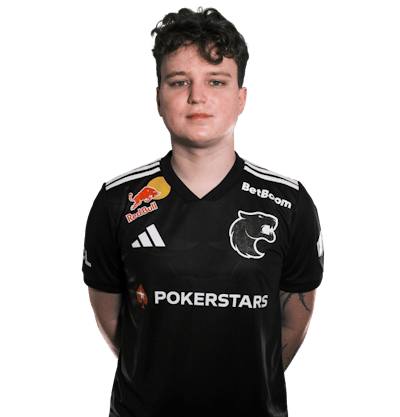
Mareks Gaļinskis·LV· Age 27
Mareks Gaļinskis is the entry fragger for FURIA. HLTV Top 20 #15 (2025), $791,764 in career prize money.
YEKINDAR CS2 crosshair code
CSEfuw684SojzSZUsZkMbukFdGGpAK348iWnM7ChBBnYCW[01] — Settings & config · player_settings
Mouse, crosshair, viewmodel, video, HUD, OSD, driver and config — every row read from the verified settings file.
Last verified · Oct 18, 2026
Match YEKINDAR's 960 eDPIto your own mouse DPI.
Your sensitivity
Formula
eDPI ÷ DPI
sensitivity 1.2YEKINDAR's reference: 800 DPI × 1.2 sensitivity = 960 eDPI
Preview the live reticle on the active-duty map pool, then verify every geometry value and copy the share code.
See YEKINDAR's exact crosshair on every active-duty map — Dust II, Mirage, Inferno, Nuke, Anubis, Ancient. Switch maps to preview the same reticle over each layout.
Share code verified
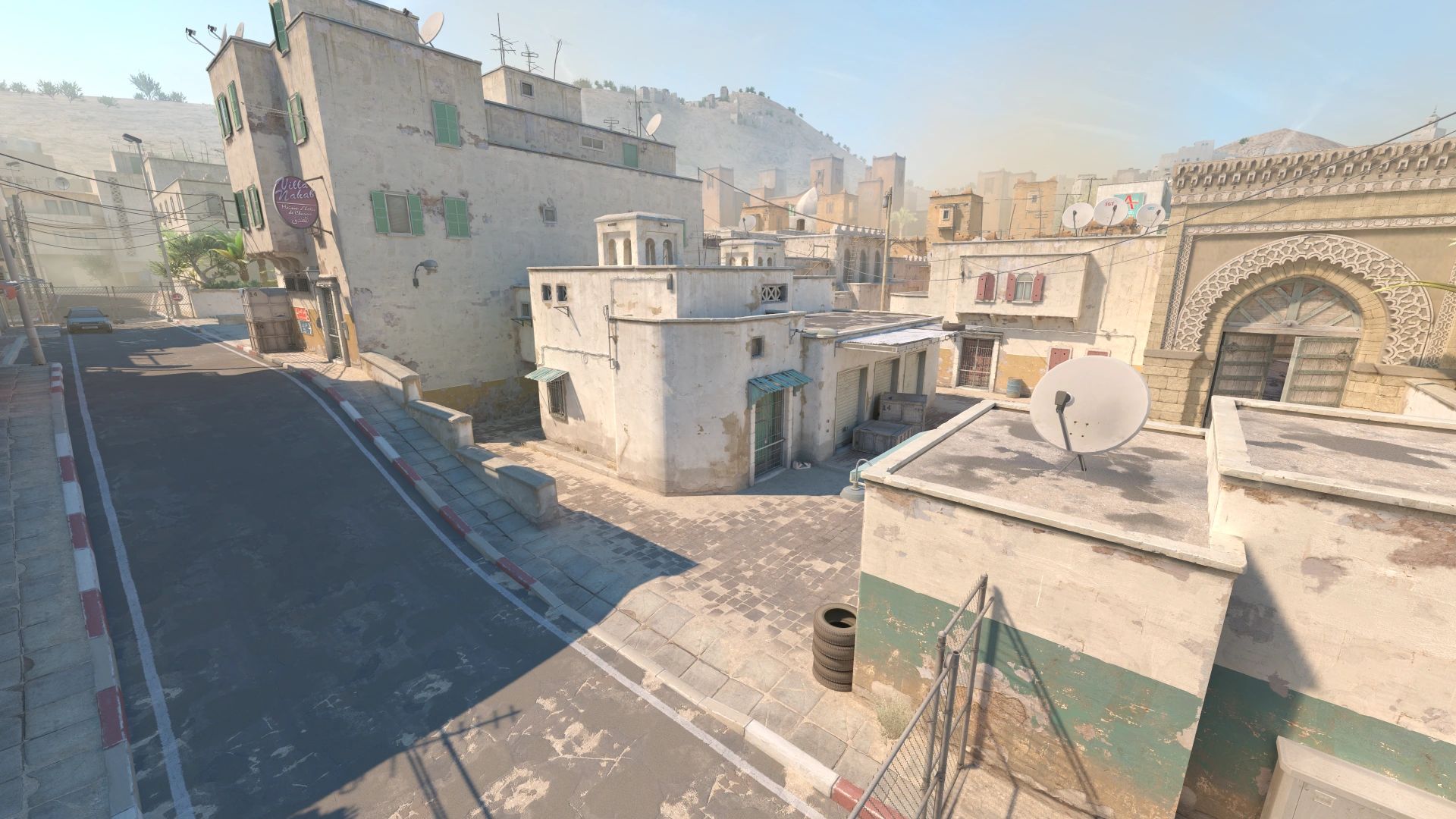
Color: RGB 14, 229, 9 (#0EE509) · Size: 2 · Thickness: 2 · Gap: 1 · Dot: 0 · Outline: 0
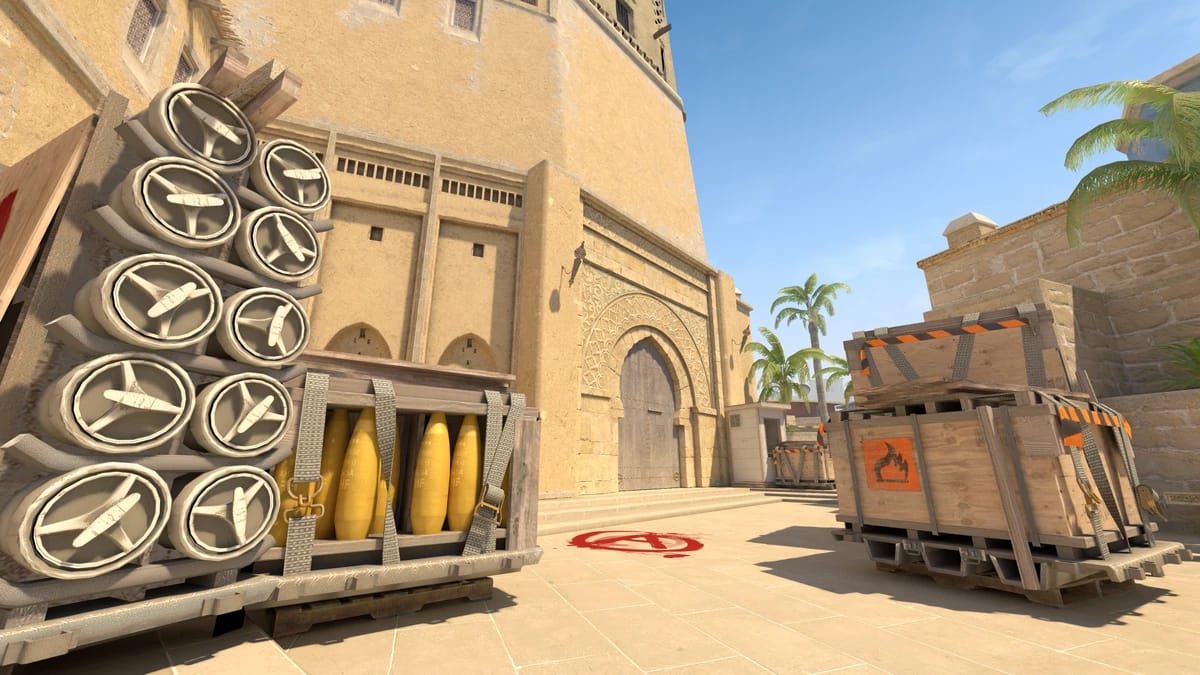
Color: RGB 14, 229, 9 (#0EE509) · Size: 2 · Thickness: 2 · Gap: 1 · Dot: 0 · Outline: 0
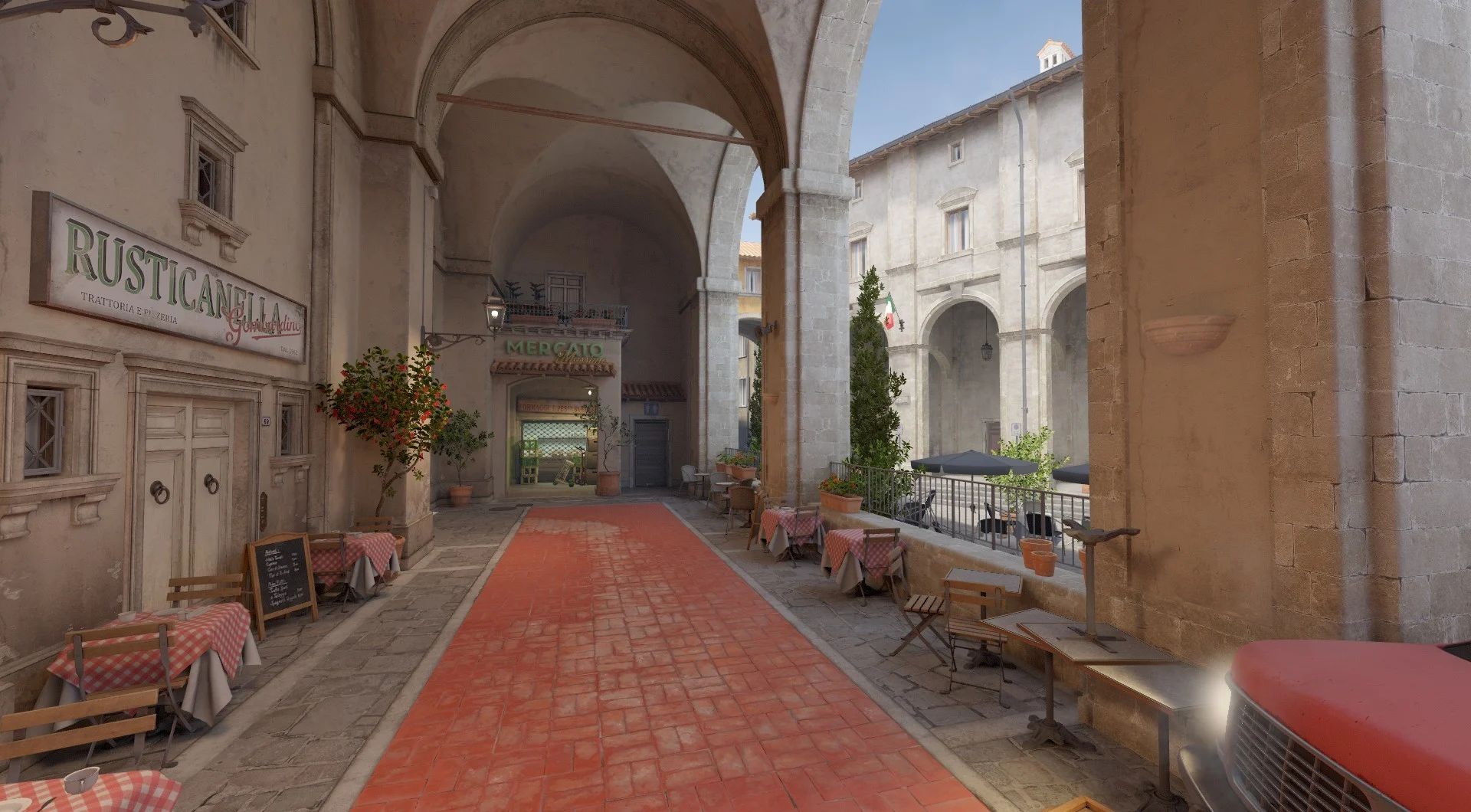
Color: RGB 14, 229, 9 (#0EE509) · Size: 2 · Thickness: 2 · Gap: 1 · Dot: 0 · Outline: 0
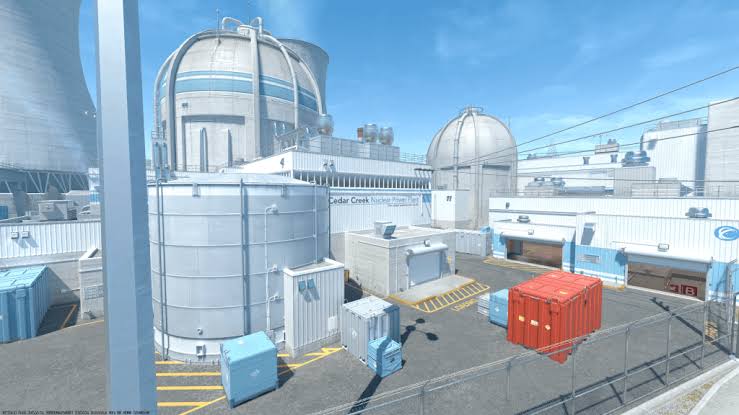
Color: RGB 14, 229, 9 (#0EE509) · Size: 2 · Thickness: 2 · Gap: 1 · Dot: 0 · Outline: 0
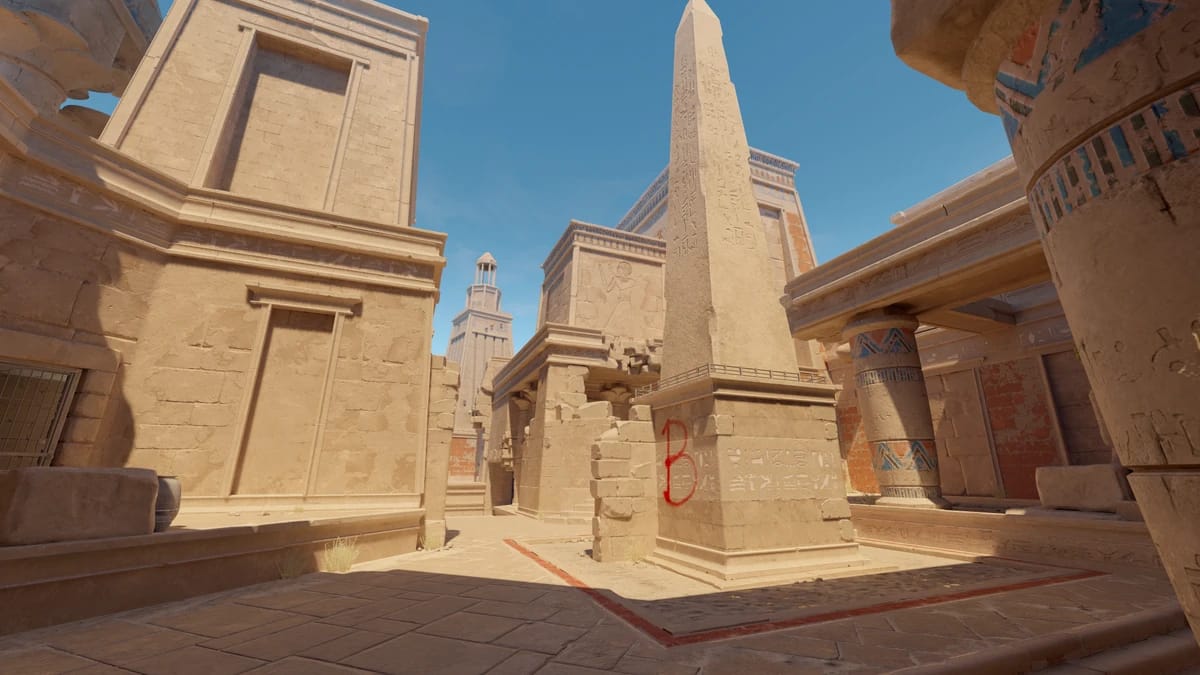
Color: RGB 14, 229, 9 (#0EE509) · Size: 2 · Thickness: 2 · Gap: 1 · Dot: 0 · Outline: 0
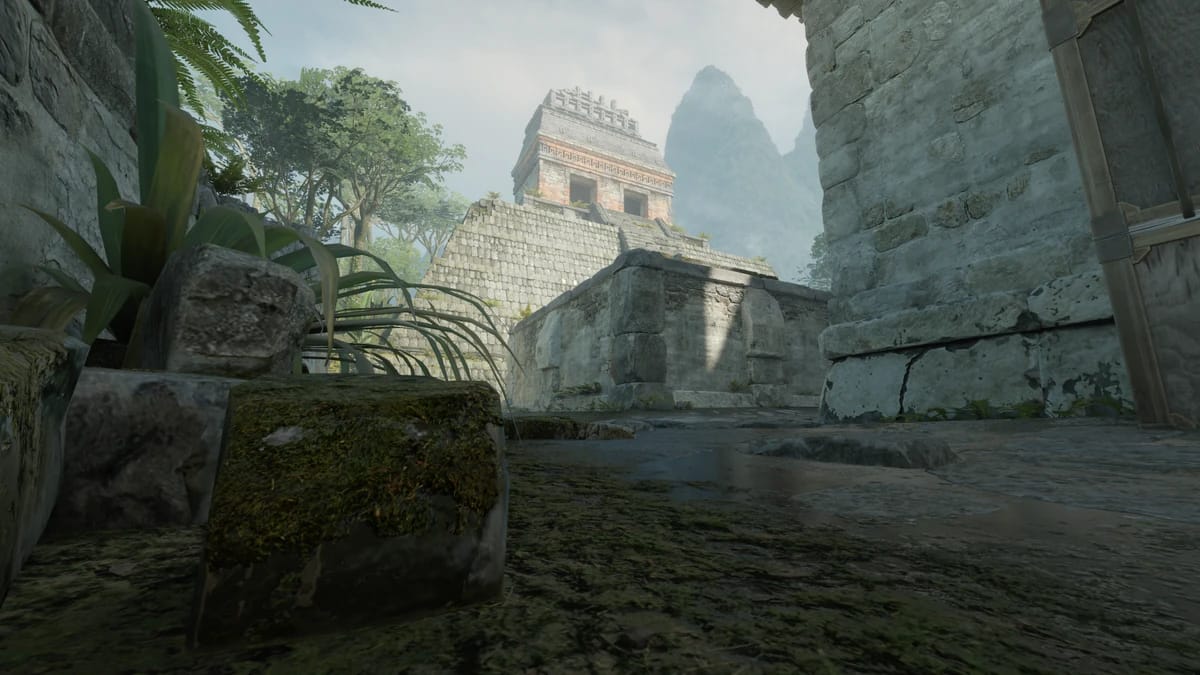
Color: RGB 14, 229, 9 (#0EE509) · Size: 2 · Thickness: 2 · Gap: 1 · Dot: 0 · Outline: 0
CSEfuw684SojzSZUsZkMbukFdGGpAK348iWnM7ChBBnYCWShare code
CSEfuw684SojzSZUsZkMbukFdGGpAK348iWnM7ChBBnYCWStatic Cross · RGB 14, 229, 9
6 frame-pacing rows
viewmodel_fov 65; viewmodel_offset_x -0.5; viewmodel_offset_y 1; viewmodel_offset_z -2; viewmodel_presetpos 0;-noreflex[02] — Gear & PC specs · player_gears
9 active · 0 retired. PC components, CS2 gaming gear and setup accessories, each with its verified tenure.
PC specs
2 items
Tenure: 2025-01-01 → PRESENT

Tenure: 2025-01-01 → PRESENT
boost clock: 2.617GHz · memory size: 16GB · memory type: GDDR7 · nvidia cuda cores: 10752
CS2 gaming gear
5 items

Tenure: 2025-01-01 → PRESENT
size: 24.5" · g sync: No · freesync: No · panel tech: TN · resolution: 1920x1080 · aspect ratio: 16:9 · refresh rate: 360

Tenure: 2025-01-01 → PRESENT
shape: Ergonomic · width: 6.5cm · height: 4.2cm · length: 12.3cm · sensor: PAW3950 · weight: 60g · connection: Wireless · polling rate: 125, 250, 500, 1000, 2000, 4000 · button switches: Huano

Tenure: 2025-01-01 → PRESENT
height: 47cm · length: 39cm · material: Cloth · thickness: 3.5mm · foam firmness: Firm · overall glide: Control · stitched edges: Yes · static friction: High · dynamic friction: High · glide difference x y: 15.4%

Tenure: 2025-01-01 → PRESENT
pcb: Hotswappable · rgb: Yes · width: 34.6cm · height: 2.84cm · length: 14.2cm · weight: 790g · switches: Lekker Linear 45 v2, Lekker Linear 60 v2, Lekker Tikken Light, Lekker Tikken Medium, Geon Raw HE, Wooting x TTC KOM · form factor: TKL

Tenure: 2025-01-01 → PRESENT
type: Closed-Back · weight: 320g · connection: Wired · microphone: Detachable · cable length: 300cm · noise cancelling: No
Setup
2 items

Tenure: 2025-01-01 → PRESENT
material: Real Leather, Artificial Leather, Fabric · max weight: 180kg · lumbar support: Built-in and adjustable · adjustable armrests: Yes · adjustable backrest: Yes · adjustable seat depth: No · adjustable seat height: Yes

Tenure: 2025-01-01 → PRESENT
[03] — Verified skins loadout · 26 items
Screenshot-verified loadout, priced at current market estimates.

Factory New (FN)

Factory New (FN)

Field-Tested (FT)

Minimal Wear (MW)

Factory New (FN)

Field-Tested (FT)

Factory New (FN)

Factory New (FN)

Minimal Wear (MW)

Factory New (FN)

Field-Tested (FT)

Minimal Wear (MW)

Factory New (FN)

Factory New (FN)

Factory New (FN)

Minimal Wear (MW)

Minimal Wear (MW)

Factory New (FN)

Factory New (FN)

Minimal Wear (MW)

Factory New (FN)

Factory New (FN)

Factory New (FN)

Minimal Wear (MW)

Field-Tested (FT)

Factory New (FN)
[04] — Tactical profile · player_career_stats
career
recent 3 months
CT side
1.06
ADR 77.1 · KAST 72.0% · K-D 7,502:7,587
T side
1.02
ADR 72.1 · KAST 70.0% · K-D 6,653:7,004
Round economy
| Season | Rating 3.0 | ADR | K-D | Maps | Event wins |
|---|---|---|---|---|---|
| 2026 | 1.01 | 71.4 | 1.00 | 153 | 0 |
| 2025 | 1.07 | 78.0 | 1.01 | 204 | 3 |
| 2024 | 1.06 | 77.1 | 0.98 | 204 | 0 |
| 2023 | 1.00 | 72.0 | 1.05 | 204 | 0 |
| 2022 | 1.01 | 75.3 | 1.05 | 204 | 0 |
| 2021 | 1.08 | 73.4 | 1.01 | 204 | 0 |
| 2020 | 1.00 | 76.3 | 1.02 | 204 | 0 |
| 2019 | 1.00 | 73.9 | 1.00 | 204 | 0 |
| 2018 | 1.06 | 74.9 | 0.99 | 204 | 0 |
| 2017 | 1.01 | 74.9 | 1.04 | 204 | 0 |
[05] — The dossier · long-form
Latvia's most decorated Counter-Strike player never learned to slow down. Across nine professional years, Mareks "YEKINDAR" Gaļinskis built a career on first contact: entering sites before anyone else, taking opening duels his teammates would not, and absorbing the volatility that comes with a role where dying early is part of the job description. By the end of 2025, at 26 years old, he had reclaimed a place among the HLTV Top 20 players of the year for the third time, led FURIA to four Big Event trophies, and captained a Brazilian organization to the number-one ranking in the world for the first time in its history — a redemption arc that began on the bench of Team Liquid and passed through a question he had publicly refused to answer for two years: whether he was still good enough to be the player who started fights for a winning team.
His HLTV profile, generated from his rolling three-month form, reads Opening 87 out of 100 — an elite score — alongside Utility 71, Firepower 58, Entrying 50, Clutching 25, Trading 9, and Sniping 0. The asymmetry is the career. YEKINDAR has never been a closer in the classical sense; he has been the instrument that creates the round his teammates are then expected to win. Understanding how a player with a Trading score of single digits became indispensable to championship rosters requires following him from a small Latvian lineup in 2017 through the Russian-speaking CIS circuit, a pandemic-era online era, a North American superteam, an aborted experiment as in-game leader, and finally a South American side that gave him, at the end of a long winter, exactly the role he had been missing.
Mareks Gaļinskis was born in Latvia in 1999. His first recorded professional team was Wolsung, a Latvian squad he joined in April 2017, at 17, alongside countrymen including Ilya "Whiskas" Rastopčins and Toms "Feagleyy" Kārlis. The Baltic Counter-Strike scene in 2017 was a regional pool, not a pathway: tournaments were small, salaries were smaller, and the infrastructure that funnels Northern and Western European talent into academy systems effectively did not exist. What the region did produce was a generation of players fluent in Russian — a linguistic accident of the post-Soviet Baltics that would prove decisive for Gaļinskis.
His proficiency in Russian quickly allowed him to step out of the small Baltic scene, as HLTV's Top 20 profile of 2021 documented, when veteran in-game leader Dmitry "hooch" Bogdanov took him under his wing on an EPG team that also featured young talents Aleksei "El1an" Gusev and Aleksei "NickelBack" Trofimov. EPG was not an elite organization; it was a proving ground in the Russophone tier-2 circuit. But it was where Gaļinskis learned the professional habits that the Latvian pool could not teach — practice structures, online qualifier grinds, and the competitive standard of the CIS region, which in 2017 and 2018 was deep enough to produce future Major winners.
He spent a short spell with FORZE in the summer of 2018 before settling into pro100 in October 2018, where he would remain for nearly two years across multiple roster iterations. pro100 competed around the top 30 level, a tier where the financial rewards were modest and the calendar was a continuous loop of online cups and small LANs. It was during these years, roughly 2019 into early 2020, that Gaļinskis's identity as a player hardened. His HLTV profile records 5,990 matches across FACEIT and FPL with a 1.32 average KDR — the statistical residue of an era when grinding online was the only available form of development, and when a Latvian player with Russian fluency and mechanical talent had to prove himself in someone else's scene before the CIS establishment would take him seriously.
The professional rewards were real but limited. His first paycheques came from the Russophone scene; they did not lead to greater things immediately. What they did was produce numbers that eventually reached the right desk. By early 2020, Gaļinskis's tier-2 statistics and his performances at smaller international LANs had made him a candidate for a Virtus.pro organization that had itself just completed a rebirth: Dzhami "Jame" Ali's squad had signed with the org following a run to second place at the StarLadder Berlin Major with AVANGAR, and the roster was looking for a youthful injection of aggression to complement Jame's famously deliberate, risk-averse system.
Virtus.pro signed YEKINDAR in May 2020, replacing Timur "buster" Tulepov in the active lineup and placing him alongside Jame, Aleksandr "Qikert" Golubev, and the AVANGAR core. The fit was, on paper, counterintuitive. Jame's Virtus.pro was the slowest team in elite Counter-Strike, a squad built on information gathering, economic discipline, and late-round execution. YEKINDAR's entire reputation, forged in the open-cup wasteland, was built on the opposite instinct: taking space immediately, taking the first duel, and creating the four-versus-four that the system could then exploit.
The COVID-19 pandemic denied him a traditional tier-1 apprenticeship. Rather than learning the ropes on LAN against established organizations, his first six months in the jersey were an online experiment — and the experiment worked almost immediately. Virtus.pro picked up wins at IEM New York CIS, Flashpoint 2, and DreamHack Open December within his first half-year, with YEKINDAR establishing himself as the tip of the spear in HLTV's contemporaneous description: the person who would open up rounds and create space to allow the rest of his teammates to shine. At Flashpoint 2, in victories over world-ranked BIG, OG, and fnatic, he led the tournament in total opening kills with 84, in opening kills per round at 0.16, and sat in the top ten for impact rating at 1.20, despite a modest 1.06 event rating of his own.
The pace of his adaptation to elite competition was the first genuine surprise of his career. Opponents had spent 2020 learning to play against a Virtus.pro that had no interest in giving them early-round fights; YEKINDAR forced them to invent answers to a player who would sprint at them before Jame's system had even decided what the round was going to be. The counter-stratting response — utility dumped early to slow his advances, dedicated anchors watching his expected entry paths, anti-eco caution against his aggression — became a defining tactical subplot of 2021. His ability to produce against those answers is what separated him from a generation of volatile entry-fraggers.
YEKINDAR's 2021 was the year the Latvian became a fixture in the conversation about the world's best players, and the statistical anatomy of that year remains one of the clearest illustrations of how an entry-fragging specialist can accumulate elite value. HLTV named him the eighth-best player in the world at the end of it — his first Top 20 placement, arrived at on the back of eight Event-Valuable Player awards and a body of work that included arena Counter-Strike, a Major quarter-final, and some of the highest opening-duel numbers ever recorded across a full season.
The year opened at cs_summit 7, an online event Virtus.pro won without dropping a map. YEKINDAR posted a 1.22 rating, 87.1 ADR, and a 1.48 impact rating, earning an EVP and narrowly missing MVP to Jame. The real statement came at IEM Katowice, the first arena event of the year and one of the most prestigious tournaments on the calendar. After navigating a difficult Play-in — including a 1.75-rated, 111-ADR series against Renegades to survive elimination — YEKINDAR produced what HLTV's Top 20 retrospective described as a tournament showing in the s1mple category of carry prowess: a 1.28 rating across 17 maps, 92 ADR, and a 1.57 impact rating. He took an EVP; only Dmitry "sh1ro" Sokolov's performance for Gambit denied him the MVP.
What followed was a stretch that illustrated both Virtus.pro's ceiling and its structural limits. The team dipped through ESL Pro League Season 13, Funspark ULTI, and DreamHack Masters Spring — YEKINDAR still collecting awards through the slump, including a 1.24-rated EVP at EPL 13 while the team squeaked into the playoffs — before rebounding at EPIC League CIS and IEM Summer. At the StarLadder CIS RMR, where Virtus.pro nearly collapsed with a single series win and a worrying loss to 100PG, he was again their best performer. The pattern of the year was set: YEKINDAR's floor was remarkably high even when the team's results were not, and his peaks arrived precisely when qualification was on the line.
IEM Fall CIS produced his best domestic showing: a 1.30 rating, 95 ADR, and 1.56 impact rating across 12 maps, enough to carry the team to a fourth-place finish that, combined with rivals' collapses elsewhere, secured Virtus.pro their points for the PGL Major Stockholm. It was an EVP, again narrowly missed MVP. At the Major itself — his first — the Challengers stage saw him post a 1.16 rating with a 0.23 opening-kills-per-round figure and 1.44 impact. The Legends stage delivered the drama: with elimination facing them, he produced 1.15 and 1.16-rated series wins over MOUZ and FaZe while Jame had a quiet event, and Virtus.pro reached the quarter-finals before falling to HEROIC. YEKINDAR's 1.09 across the playoff stage still led his team; it earned him another VP award on a resume that by year's end contained eight, with only a single offering event at which he won neither VP nor EVP.
The season's aggregate numbers explain the Top 20 placement better than any single event. He ranked joint-first in opening kills per round at 0.18, won 53% of those duels for a 1.30 opening kill rating — the highest of all players that year — and produced a 1.36 impact rating, third-highest among all players. His multi-kill rounds came in 18.6% of attempts (tenth globally), his ADR of 84.5 was third-best in the world, and 86% of his kills were unassisted, the highest percentage recorded. He was fifth in average kills per round-win at 1.07 and second in average damage per round-win at 113.8. The eight-place finish, arriving at age 22, was HLTV's recognition that no player combined his opening volume with his round-winning efficiency while also maintaining a 1.14 rating at Big Events.
YEKINDAR has attended eight Valve Majors across four organizations and reached the quarter-finals or better on five occasions, without winning one. His Major record is a ledger of near-misses and context-dependent exits rather than collapses, and it tracks the trajectory of every team he has played on.
PGL Stockholm 2021, his first, ended in the quarter-finals to HEROIC after the run described above. PGL Antwerp 2022 came during the peculiar spring in which the Virtus.pro roster competed under the Outsiders banner — a consequence of US-imposed sanctions on the organization over its ownership's ties to the Russian government — and ended in the Legends stage. IEM Rio Major 2022, his first with Liquid, also stopped in the Legends stage, but arrived in the middle of a team transformation that had already produced a runner-up finish at ESL Pro League Season 16 and a first-place run at the IEM Road to Rio Americas RMR.
The 2023 and 2024 Majors were the painful ones. BLAST.tv Paris Major 2023, the final CS:GO Major, ended in the quarter-finals for a Liquid side in the middle of its European-core transition — the same transition that would see YEKINDAR take over in-game leading duties with what HLTV's own Top 20 summary later called an outcome "without success." Perfect World Shanghai Major 2024 was his last event as a Liquid player: a quarter-final exit followed by a benching, coming at the end of a year in which his individual form had fallen off a cliff. "At the end of Liquid, before [BLAST World Final] Hong Kong and before the Shanghai Major, I was on an uprise mentally and in all aspects," he would later say. "I thought I was already playing better. I got benched afterwards, and to some degree, it was a weight off my shoulders because I knew I could start anew."
"I thought I was already playing better. I got benched afterwards, and to some degree, it was a weight off my shoulders because I knew I could start anew."
The FURIA Majors reopened the ledger. BLAST.tv Austin Major 2025, his first tournament with the organization as a permanent member of the project, saw FURIA traverse Stage 2 with a single loss to paiN and then dominate Stage 3 with a 3-0 record. YEKINDAR averaged a team-high 1.31 rating in the group stage, including BO1 wins over The MongolZ and Aurora — two teams that had beaten them at PGL Astana weeks earlier. The quarter-final against paiN in the arena went to overtime on Inferno and ended in defeat, with YEKINDAR's individual numbers collapsing from group-stage heights to 0.99 in the playoff match. "The group stage was great, but against paiN we came to our first obstacle. We understood we needed more experience in these arena games," he recalled. "I started the CT side well on Inferno and then T side I went 0-14 or something."
StarLadder Budapest Major 2025, in the MVM Dome, ended in the quarter-finals again after FURIA had romped through the group stage, with YEKINDAR posting a 0.94 event rating — one of the weaker showings of his FURIA tenure. The pattern that defined his Liquid-era Majors — deep runs with a step missing at the business end — had transferred intact. It was IEM Cologne Major 2026 that finally broke the mould: a runner-up finish at the first Major of the new era, an EVP award for YEKINDAR's individual contribution, and the kind of deep tournament run that his 2021 peak had promised but his middle years had deferred. It remains, as of this writing in October 2026, the furthest he has ever gone at a Major.
The attribute scores on YEKINDAR's HLTV profile are not a balanced radar chart; they are a job description. Opening 87 and Utility 71 sit alongside Firepower 58, Entrying 50, Clutching 25, Trading 9, and Sniping 0. Read together, they describe a player whose entire competitive value is concentrated in the first twenty seconds of the round, and who is statistically one of the least likely players in elite Counter-Strike to be the last man standing.
The Opening score of 87 reflects what the 2021 season proved in raw numbers: joint-first in opening kills per round, a world-leading 1.30 opening kill rating, and a 53% success rate on those duels. The Entrying score of 50 — nominally lower than his general Opening mark — reflects the distinction between taking first contact and converting it into site entries with trades behind him; the Trading score of 9 is the mathematical corollary of a player who is, by role definition, the one being traded rather than the one trading. His Clutching score of 25 and Sniping of 0 complete the picture of a specialist rather than a generalist: YEKINDAR does not save rounds from impossible positions and he does not operate the AWP. His 2025 profile attributes list a Sniping score of zero — he has never been a sniper in any competitive sense of the word.
His ADR and impact figures across peak seasons explain how a player with these asymmetries sustains elite value. The 84.5 ADR of 2021 was third in the world; his 1.36 impact rating was third; and his rate of unassisted kills — 86% — was the highest recorded, meaning his damage was overwhelmingly self-generated rather than the product of teammates' setups. This is the statistical signature of a player who creates his own opportunities, which is exactly what entry-fragging at the highest level demands. It also explains the volatility that opponents and commentators have noted throughout his career: rounds in which the opening duel does not go his way leave his team in the four-versus-five that his role exists to prevent.
The 2025 tournament-by-tournament data from HLTV's Top 20 profile shows this oscillation at event granularity. At FISSURE Playground 2, his ratings across winning maps against elite opposition included peaks of 1.93, 1.78, 1.67, 1.54, and 1.34; at Thunderpick World Championship, he began the grand final's deciding map with a 0.29 rating before closing it with 1.42 after a reverse-sweep from 0-2 down. At BLAST Rivals Season 2, a single second half on Nuke in the grand final against Falcons produced a 4.06 map rating on a 21-3 kill line. These are not the numbers of a consistent floor player; they are the numbers of a player whose team wins when he is at his ceiling, and must survive when he is not.
His Utility score of 71 is the quiet counterweight to the aggression. For a player whose reputation rests on raw duelling, a above-average utility mark reflects the work he has described doing on preparation and mid-round adaptation, and the tactical contributions that made him valuable enough to Virtus.pro's structured system that Jame's squad did not simply replace him with a more conventional rifler. The attribute profile, taken as a whole, is the profile of a high-variance, high-leverage specialist — a description his FURIA tenure has done more to validate than any previous chapter of his career.
YEKINDAR's relationship with leadership is the fault line running through the middle of his career, and it is a subject on which he has spoken with unusual candour.
The experiment began in 2023, when Liquid's transition from an American core to a European one left the team without a natural in-game leader and YEKINDAR — the most experienced player on the roster, fluent in the team's working languages, and temperamentally assertive — took over the calling. By October 2023, HLTV reported that YEKINDAR would handle in-game leading duties for BLAST Showdown, with coach Damian "daps" Steele set to take over calling responsibilities for the CS2 era. The results never matched the ambition. HLTV's 2025 Top 20 retrospective summarized the season in a clause that has since become the consensus framing: "In 2023, the organization transitioned from an American core to a European one and YEKINDAR to an in-game leader without success."
His own account, given two years later on HLTV Confirmed, is more granular and more self-critical than the summary. "I was complete ass in terms of... I don't think I was a bad IGL, and I would definitely want to be an IGL in the future," he said, before correcting himself: "but I was just a terrible leader. I was a young kid who wanted to win so bad that I could not hold my emotions back. When you have young players, like I had oSee, Patsi, and Rainwaker — Keith [NAF] is a little bit older, yeah — you have to be an example for them, and I was definitely not the example that I should have been during that time."
The emotional dimension he describes — the inability to contain frustration in front of less experienced teammates — connects to a broader pattern in his LAN demeanour. He has been, throughout his career, an expressive player: visible in the booth, demonstrative in defeat, and, by his own later admission, someone who "accumulated a lot of stress when I was in-game leading because of the fans." The IGL years appear to have concentrated those tendencies rather than resolved them, and the subsequent benching — arriving in December 2024 after the Shanghai Major — ended an experiment that neither he nor Liquid ever publicly claimed had worked.
The cadiaN interlude belongs to the same story. Casper "cadiaN" Møller's six-month tenure on Liquid, beginning in 2024, was an attempt to solve the leadership vacuum with an established caller. In a July 2024 podcast appearance, YEKINDAR explained why it had not functioned: "At the beginning, I thought cadiaN shared a lot of similarities with Jame. The biggest similarity is that he does a lot of micro-managing of his players. Generally, it's good, but I think most players lacked some individuality. I explained that international teams are carried more by an individual level and decision-making. That's why I think there were some inconsistencies, like Twistzz arrived from FaZe where he had some freedom in his roles, same with me and NAF. We had to adjust to each other a lot, so it was hard to find form as a team. There was no consistency. cadiaN is a smart captain, but in this lineup it didn't work with the individuals we had and teamwork."
His critique of cadiaN's micro-management echoed his own experience as a reluctant IGL: both situations involved a team whose structure did not leave enough room for individual decision-making from players — including himself — who had built their games on precisely that. By the same summer, his own form had become a public conversation. Averaging a 1.01 rating against top-30 opposition in 2024, down from the levels that had made him a Top 20 player in 2021 and 2022, he addressed the criticism directly: "I understand fans who are angry about my form. My game is not worthy of my team and myself." He described a confidence spiral characteristic of mechanically dependent players: "When you suck for a while, you start believing less in yourself. These micro-moments when you decide to go or not to go, especially with my roles, they make a difference. When you overthink, you lose confidence, start playing worse and it becomes a never-ending cycle of mistrust in yourself."
"I understand fans who are angry about my form. My game is not worthy of my team and myself."
The contrast with his FURIA tenure, and specifically with his description of playing alongside the Kazakhstani AWPer Danil "molodoy" Golubenko, is instructive. Where Liquid's ultimate was, in YEKINDAR's telling, an AWPer who wanted the room to execute his own plans — "it was always a little bit of a hassle with him because sometimes he needs to support and let the rifles close out some of the scenarios" — molodoy is described as a supportive, rotational sniper whose "priority is to support his teammates first, then rotate into the right position to catch the reaction." For an entry-rifler whose entire value depends on teammates converting the space he creates, the difference between those two AWP philosophies is not a matter of style; it is the difference between a system that amplifies his openings and one that squanders them.
YEKINDAR has also spoken warmly of Gabriel "FalleN" Toledo's rifling contributions, joking that he spams "34-year-old btw" in team chat after the Brazilian veteran's clutch rounds. FalleN's influence, which YEKINDAR has credited as a stabilizing presence through FURIA's 2025 trophy run, provides the leadership structure that YEKINDAR's own experiment showed he could not yet supply himself. As of September 2026, he has publicly stated that he is not calling in-game and does not intend to again: "I'm not calling anymore, and hopefully I'm not going to be in the future" — a position that marks a full cycle from the young player who took the responsibility on before he was ready to lead, and learned the cost of learning in public.
The winter of 2024–2025 was the quietest of YEKINDAR's professional life. Released from Liquid's active roster with no tier-one offers materializing, he later described the market with characteristic bluntness: "There were no tier-one offers. Only teams that were maybe top 20-25. I was very close to going with one team, but they decided to go another way." He took a two-month break from competitive play entirely before a plan began to form around a project involving Ilya "Perfecto" Zalutskiy and Oleksandr "s1mple" Kostyliev — a Russian-speaking stack that never fully assembled.
"There were no tier-one offers. Only teams that were maybe top 20-25. I was very close to going with one team, but they decided to go another way."
What did assemble, through what YEKINDAR has called a masterstroke by his agent Samy Bessi, was a FURIA side rebuilding around molodoy, who was entering his first international squad and would benefit from a veteran presence to ease the transition. The deal was initially a three-event stand-in arrangement running to the BLAST.tv Austin Major. FURIA benched Felipe "skullz" Medeiros in late April 2025 to bring him in, and the team debuted at PGL Astana with a fourth-place finish — beating Brazilian opposition and taking maps off Spirit, The MongolZ, and Aurora. "Astana was the big tell," YEKINDAR said. "In my opinion, if people click, you can instantly notice it. We had the right players. We just needed to readjust a couple of things, do a couple of things differently. It was a great example of molodoy and understanding this guy is the real deal."
The logistics of that spring were unforgiving. Astana's run ended the day before IEM Dallas began, and FURIA arrived in Texas hours before their first match after a 20-hour travel day, losing to The MongolZ and GamerLegion with YEKINDAR posting a 0.79 rating across seven maps. The Austin Major quarter-final loss to paiN followed. Then came the formalization: YEKINDAR's permanent transfer was announced during the summer off-season, and the second season of the project began with an early exit at FISSURE Playground 1 — a tournament at which he struggled in group-stage losses to SAW.
What followed was the run that redefined the career. FISSURE Playground 2 in Belgrade in September 2025 brought a run through Liquid, G2, and paiN — the three teams that had eliminated them from three of the previous five events — before a best-of-five grand final against The MongolZ. YEKINDAR produced a 1.32 on an overtime Mirage win, a 1.79 on an overtime Nuke win, and a 1.96 on the Dust2 decider, collecting an EVP and, more importantly, his first Big Event trophy of any kind. "Before FISSURE, I was thinking 'bro, maybe I'm never gonna win. Am I gonna be happy with the time I had if I'm not gonna win?' And then half a month later we won FISSURE," he said. "I started doubting myself a little bit, and then the world was like, 'okay, you can have it.'" He credited FalleN's insistence that one trophy unlocks the next — "he said that's what happened before in SK, you win one trophy and you get the juju, the feeling" — and described a final in which a brief behind-the-scenes conflict over a lost map resolved itself within a minute without affecting performance: "That gave me the feeling that we were gonna win this final."
Three more trophies followed in the span of two months. Thunderpick World Championship in Malta, FURIA's second home, delivered a reverse sweep of Natus Vincere from 0-2 down in the best-of-five, with YEKINDAR recovering from a 0.29 opening on Mirage to post 1.51 and 1.42 in the closing maps. IEM Chengdu brought a 3-0 grand-final victory over Vitality — the year's best team — with YEKINDAR posting a server-topping 95 ADR and a 1.26 rating, and a second EVP from an Elite-event field. "Ancient gave us the momentum," he said of the final. "On any different day, if FalleN doesn't win three clutches across all three maps, Vitality wins that final." BLAST Rivals Season 2 in Hong Kong completed the set: another win over Vitality in the groups, another hard-fought grand final against Falcons decided by YEKINDAR's second half on Nuke — 21-3 kills, a 4.06 map rating — and a 1.32 in double-overtime Mirage to close it. It was FURIA's fourth trophy, and it carried the organization to number one in HLTV's world ranking for the first time in its history, a milestone the organization had spent over a decade pursuing.
The 2025 season ended at 15th in the Top 20 — his third placement, matching his 2022 finish and closing the gap to his 2021 peak of eighth. The individual figures were more modest than the trophy haul: a 1.07 event rating across the season, a 1.02 in playoffs, and a 1.00 against top-five opposition. But the four EVP awards — one of only thirteen players on the list to collect four or more — and the weight of winning in an era dominated by Vitality made the case. The 2026 season has continued in the same register: a runner-up finish at IEM Cologne Major 2026 with an EVP, another runner-up at IEM Kraków, and a semi-final at the StarLadder StarSeries Fall event as the October international calendar resumed.
The aggregate record as of October 2026 stands at $791,764 in career prize money, six Big Event trophies across three organizations — two with Virtus.pro, four with FURIA — twelve EVP awards, no MVPs, and three Top 20 appearances spanning five years. The absence of an MVP medal is the one significant gap in the trophy cabinet, and it is a gap that tells its own story: YEKINDAR's value has always been distributed across the arc of a tournament rather than concentrated in the single dominant performance that MVP awards are designed to recognise. His 2021 Katowice showing came second to sh1ro; his 2025 finals performances came in teams where teammates' contributions were too evenly spread for one player to separate from the pack.
Among Latvian players, there is no comparison to draw. No other player from the country has approached his competitive record, his Top 20 placements, or his tenure at the top of the world ranking. The nine-year career, beginning in the Baltic domestic scene and continuing through the Russophone circuit, a CIS superteam, a North American organization's European experiment, and now a Brazilian side's international rebuild, is itself a record of a player who has been willing to learn new languages — literal and tactical — three times over.
His FURIA contract, begun as a stand-in arrangement in April 2025, has now lasted more than 500 days, longer than any single arrangement outside his original Virtus.pro stint. The team ranking currently sits at number three in the world, a peak of number one achieved during the 2025 trophy run. At 26, he is in the age range where entry-fraggers historically begin to feel the cost of their role in physical terms — reaction times, recovery between maps, the accumulated wear of taking first contact every round — and where the strategic question of whether to transition into a secondary role, or into leadership, becomes unavoidable. His stated position, as of his September 2026 remarks, is that he has no intention of calling in-game again.
The statistical pantheon he occupies is specific rather than general. Among the greatest entry-fraggers of the professional era, his 2021 season ranks with the most efficient on record: the combination of world-leading opening-duel ratings, the highest rate of unassisted kills, and second-best damage-per-round-win figures has few comparisons across any era. The years that followed — the IGL experiment, the cadiaN collapse, the benching, the quiet winter — did not erase those numbers; they complicated them, and they gave the 2025 revival a narrative shape that a continuously ascending career would not have had. "I wanted to prove to myself that I could do it," he said of the FISSURE final. "It comes from preparation and many different things."
What remains unverified in the public record is the interior of the winter of 2024–2025 — the two months away from the game, the abandoned project with s1mple and Perfecto, and the precise sequence of conversations that turned a three-event audition into a permanent home. The documentary record, as assembled here, is the external one: the tournaments, the quotes, the ratings, and the trophies. By that measure, the career of Mareks Gaļinskis is the story of a player who learned, at considerable personal cost, that the aggression which made him indispensable at 22 required a structure he could not yet build himself — and that found, in a Brazilian organization halfway across the world, the structure that let him build it again.
Data source: HLTV player profile record. Generated: 2026-10-10.
[06a] — Trophy cabinet · 9 titles

2025 · LAN Champion

2025 · LAN Champion

2025 · LAN Champion

2025 · HLTV Top 20

2022 · HLTV Top 20

2021 · HLTV Top 20


[06b] — Tenure timeline · teams_history_timeline
Apr 2025 - Present
May 2020 - Oct 2022
Mar 2022 - May 2022
Oct 2018 - May 2020
Jul 2018 - Aug 2018
Nov 2017 - Jun 2018
Apr 2017 - Sep 2017
FAQ · YEKINDAR
Mareks Gaļinskis is the Entry Fragger for FURIA. named HLTV Top 20 #15 in 2025, with 4 tier-one LAN titles.
YEKINDAR has earned 12 EVP mentions, 4 tier-one LAN titles including BLAST Rivals 2025 Season 2, $791,764 in career prize money.
YEKINDAR plays with 800 DPI and an in-game sensitivity of 1.2, giving him an eDPI of 960.00 with a 1.00 zoom sensitivity. His verified CS2 crosshair share code is CSEfuw684SojzSZUsZkMbukFdGGpAK348iWnM7ChBBnYCW. He plays on 1680x1050 (16:10 Native).
YEKINDAR competes with the ZOWIE EC2-DW Black mouse, a ZOWIE G-SR III mousepad, the Wooting 80HE Ghost keyboard, the HyperX Cloud II headset and the ZOWIE XL2566K monitor. He plays at 1680x1050 16:10 Native resolution.
Community Intelligence · Steam OpenID & Discord Verified
Comments, Config Tips & Setup Q&A0
Spotted a crosshair, sensitivity, or gear change on stream or FACEIT? Submit a Config/Gear Update Tip with a proof link to earn a Verified Tip badge.
Authenticate to Comment & Submit Config Tips
Sign in with your Steam account (auto-displays your CS2 hours badge) or Discord.
Posting on
/cs2/players/yekindar/cs2/players/yekindaryet. Sign in with Steam or Discord above to post the first comment or config tip!